
What to expect during a full roof replacement, step by step
By Hannah Haddad · Updated 2026-06-22
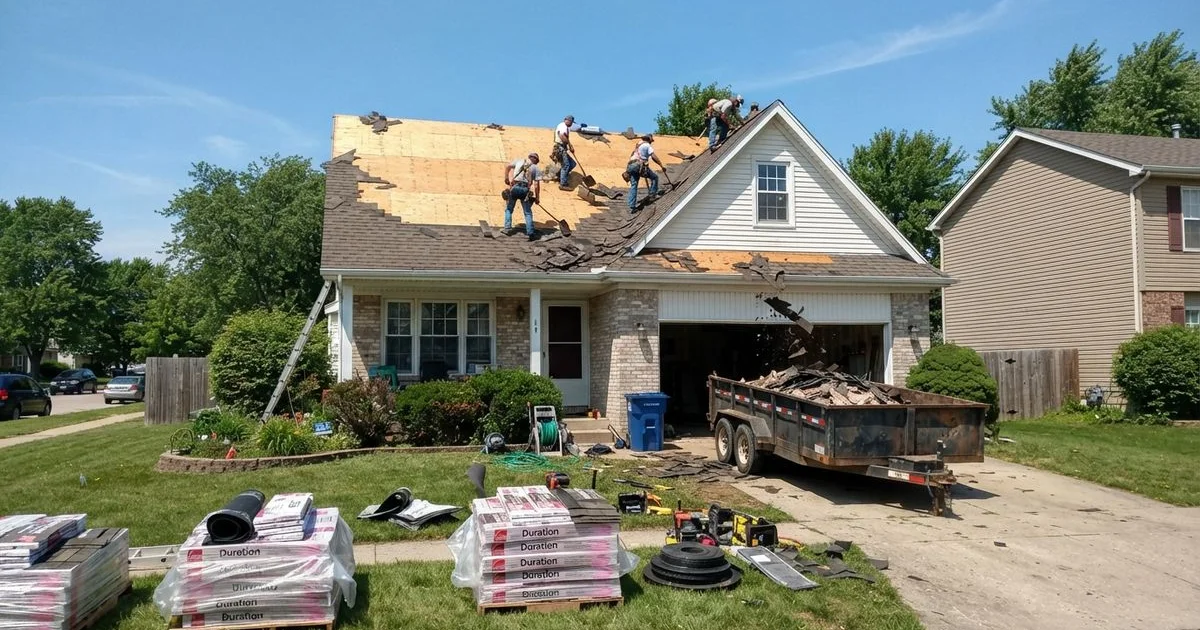
Homeowners going through a full roof replacement for the first time often don’t know what a normal job looks like, which makes it hard to tell whether a crew is working efficiently or cutting corners. Here’s what a standard tear-off and reroof actually involves, from the first estimate to the final walk-through.
Before the crew arrives
A legitimate contractor walks the roof, or flies a drone over it, before quoting anything. This visit should cover the shingle condition, flashing points, attic ventilation, and any visible sagging or soft spots. You should get a written estimate afterward specifying material brand, underlayment type, whether ice-and-water shield is included along eaves and valleys, and whether it’s a tear-off or an overlay. Once you sign, expect a scheduled start date, though weather can shift it by a few days either direction.
Day one: tear-off and inspection
The crew removes the old shingles down to the decking, section by section rather than the whole roof at once, so exposure to weather stays limited. This is when hidden problems surface: soft or rotted plywood, previous water damage, or inadequate old flashing. A good contractor photographs any decking damage before repairing it and should have already quoted a per-sheet replacement rate rather than negotiating a number on the spot.
Underlayment, ice-and-water shield, and new material
Once the deck is sound, the crew installs ice-and-water shield along eaves and valleys, required by code in this climate to guard against ice dam backup, followed by synthetic or felt underlayment across the rest of the roof. New shingles or panels go down next, with new flashing around every chimney, vent, and valley rather than reusing old flashing. This detail work is where most future leaks are either prevented or set up, so it’s worth asking the crew to point out flashing details if you’re on site.
| Stage | What happens | What to watch for |
|---|---|---|
| Tear-off | Old shingles removed down to decking | Photos of any decking damage found |
| Decking repair | Rotted plywood sheets replaced | Per-sheet rate quoted in writing, not improvised |
| Underlayment | Ice-and-water shield plus felt or synthetic underlayment | Full eave and valley coverage, not just spot application |
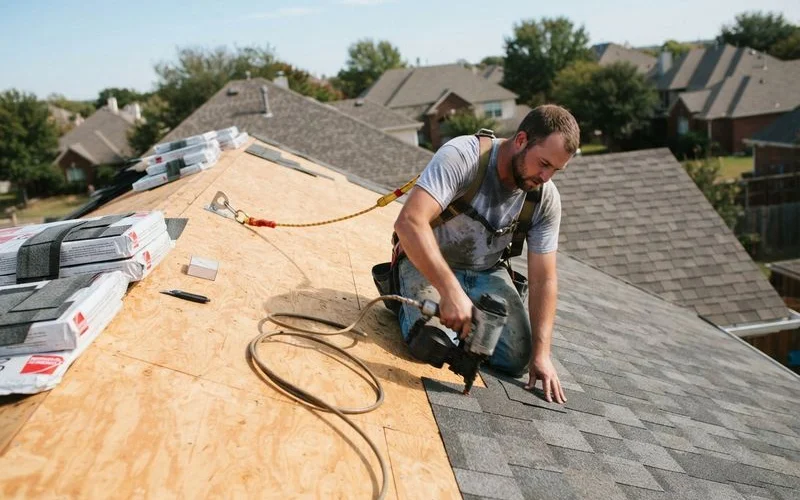
| Installation | New shingles or panels, new flashing | Straight courses, sealed tabs, no exposed nail heads |
| Cleanup | Debris removal, magnetic nail sweep | Landscaping and gutters checked for damage |
Cleanup and final inspection
A same-day cleanup is standard: debris hauled away, a magnetic sweep of the yard and driveway for stray roofing nails, and gutters checked for damage from falling material. Before the crew leaves for good, ask for a final walk-through where they point out completed work, and get any manufacturer warranty registration confirmed in writing. Some warranties require the contractor to register the installation with the manufacturer; skipping this step can void coverage even if the work itself is solid.
What a rushed or careless job looks like
Watch for shingle courses that aren’t straight, exposed nail heads instead of sealed tabs, flashing that’s caulked over rather than tucked properly under the shingle course above it, and no nail sweep left behind. Any of these on their own might be minor, but a pattern of them suggests the crew was moving faster than the job allowed.
What happens after the crew leaves
Most municipalities require a final building inspection before a roofing permit closes out, so ask your contractor when that’s scheduled rather than assuming the job is finished the moment the last shingle goes down. Keep the manufacturer warranty paperwork and the contractor’s own workmanship warranty together in one place. If a leak shows up two winters later, having both documents on hand, along with photos from the original job if the contractor provided any, makes a warranty claim far simpler than trying to reconstruct what was done from memory.
Getting ready to hire
Understanding the sequence above makes it easier to ask specific questions during your estimate rather than just comparing bottom-line prices. For typical price ranges and what drives them, see our guide on what a new roof costs in Connecticut. See our methodology for how we weigh contractor reviews and workmanship signals, and browse the full directory of roofing contractors serving Greater Hartford to start collecting quotes.
FAQ
- How long does a full roof replacement take?
- A typical single-family home takes one to three days for a full tear-off and reroof, weather permitting. Larger homes, steep pitches, or complex rooflines with multiple valleys can push that to four or five days.
- Do I need to be home during the job?
- No, but someone should be reachable by phone in case the crew finds unexpected decking damage and needs a decision on how to proceed. Pets are best kept elsewhere for the day given the noise.
- What happens if it rains partway through the job?
- A reputable crew won't leave a roof fully exposed overnight. They'll dry the section they're working on and cover it with tarps before stopping, then resume once weather clears.
- Will the crew damage my landscaping or gutters?
- Some risk exists any time equipment and falling debris are involved, but a careful crew tarps landscaping, uses ladder stabilizers away from gutters, and does a magnetic nail sweep of the yard before leaving each day.