
Signs your roof needs replacing, not just a repair
By Hannah Haddad · Updated 2026-06-24
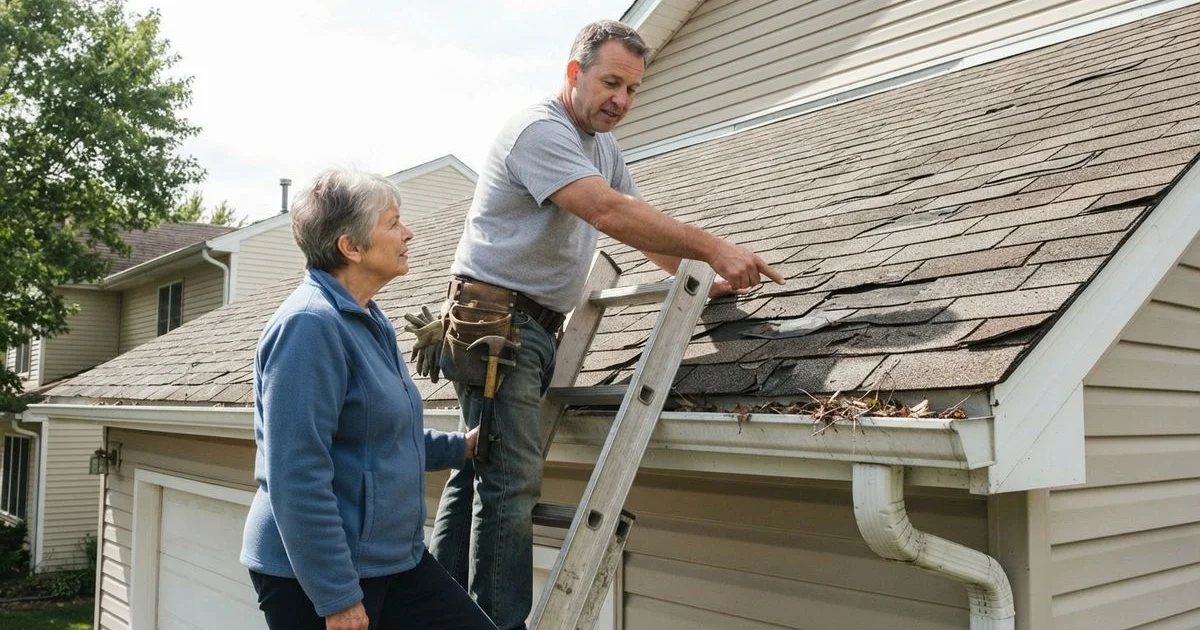
Every roof reaches a point where another patch stops making sense, but figuring out exactly when that is can be hard to judge from the ground. A residential roofing contractor should be able to explain the difference clearly, but knowing what to look for yourself helps you ask better questions and avoid paying for repeated repairs on a roof that’s already done.
Age is a starting point, not the whole answer
Standard three-tab asphalt shingles typically last 15 to 20 years in Connecticut’s climate, while architectural shingles often reach 25 to 30 years. A roof at or past that range is a reasonable candidate for replacement even if it isn’t actively leaking yet, especially if attic ventilation has been poor or the home has seen repeated ice damming. That said, age alone doesn’t tell the whole story: a well-ventilated, well-installed roof can outlast the average, and a poorly installed newer roof can fail early.
Physical signs worth checking
A few visual cues matter more than a birth year:
- Curling or cupping shingles. Edges lifting or corners curling upward mean the shingle material itself is failing, beyond ordinary wear at one spot.
- Heavy granule loss. Some granules in the gutter is normal; a steady, heavy buildup paired with bald-looking patches on the roof means the protective layer is gone.
- Cracked or missing shingles across multiple areas. A few missing shingles in one section is a repair. Damage scattered across the whole roof surface points to broader material failure.
- Sagging rooflines. Any visible dip or sag, especially near valleys, can indicate structural or decking damage that goes well beyond shingles.
- Leaks in multiple, unrelated locations. One leak near a chimney is often a flashing fix. Leaks showing up in several disconnected spots suggest the underlayment or decking is compromised broadly.
Repair versus replacement, side by side
| Situation | Usually a repair | Usually a sign for replacement |
|---|---|---|
| Single leak near a chimney or vent | Yes, likely a flashing fix | Only if flashing repair doesn’t resolve it |
| A handful of missing or cracked shingles | Yes | Only if it recurs across the roof |
| Roof age under 15 years, good ventilation | Yes | Rarely |
| Roof age past 20-25 years with prior repairs | Sometimes, short-term | Yes, usually more cost-effective long-term |
| Sagging deck or structural signs | No | Yes |
| Granule loss with bald patches roof-wide | No | Yes |
Why repeated repairs can cost more than replacement
A patch here and a patch there feels cheaper in the moment, but a roof already showing widespread wear tends to develop new problems faster than a single-item repair can keep up with. If you’ve called for repair work two or three times in as many years on the same roof, it’s worth asking your contractor directly whether you’re paying to delay a replacement that’s coming anyway.
The interior clues matter too. Check the attic during or after a rainstorm for water staining on the underside of the decking, daylight showing through roof boards, or a musty smell that wasn’t there before. These signs often show up before a leak is visible from inside the living space, and they tend to confirm what the exterior wear is already suggesting.
Getting a straight answer
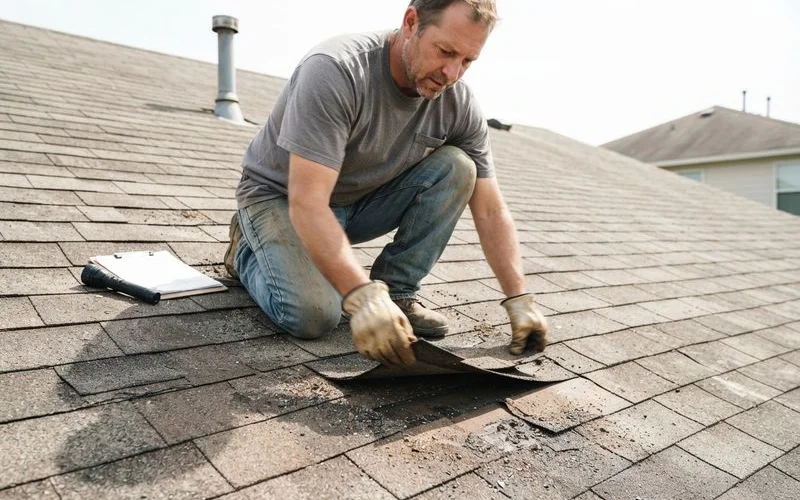
Ask any contractor doing an inspection to show you what they’re seeing rather than just describe it: photos of decking condition, close-ups of shingle wear, and specifics on where leaks are originating. A contractor who explains the reasoning behind a replacement recommendation, rather than pushing it as the only option, is one worth trusting with the job.
If two independent inspections land on the same conclusion using different specifics to support it, that’s a strong signal the recommendation is sound rather than sales-driven. Disagreement between two inspections is also useful information, and worth a third opinion before committing to a major expense either way. If you’re leaning toward replacement, our guide on what to expect during a full roof replacement covers the process, and our repair vs. replacement page can help you get quotes scoped correctly. Our methodology covers how we weigh review consistency and workmanship signals when scoring contractors, and the full directory lists every roofer serving Greater Hartford.
FAQ
- How old does a roof have to be before replacement makes more sense than repair?
- There's no single age cutoff, but a standard asphalt shingle roof approaching 20 to 25 years old, especially one with multiple prior repairs, is usually a candidate for replacement rather than another patch.
- Can one leak mean the whole roof needs replacing?
- Not necessarily. A single leak around a chimney or vent is often a flashing problem that a targeted repair can fix. It's when leaks show up in multiple, unrelated spots that the roof itself, not just one detail, is likely failing.
- Is granule loss in the gutters a serious problem?
- Some granule loss is normal as shingles age. Heavy, continuous granule buildup in gutters, especially paired with shingles that look bald or patchy, signals the shingles are nearing the end of their protective life.
- Should I get a second opinion before agreeing to a full replacement?
- Yes, especially if a contractor recommends replacement after a routine inspection with no obvious widespread damage. A second inspection costs little compared to a premature reroof.