
Who's liable when a roof leaks after a storm: insurance, contractor, or you?
By Hannah Haddad · Updated 2026-07-03
This is general information, not legal advice. Liability depends on your specific policy, contract terms, and the facts of the situation, so consult an attorney or your insurer for anything beyond general guidance.
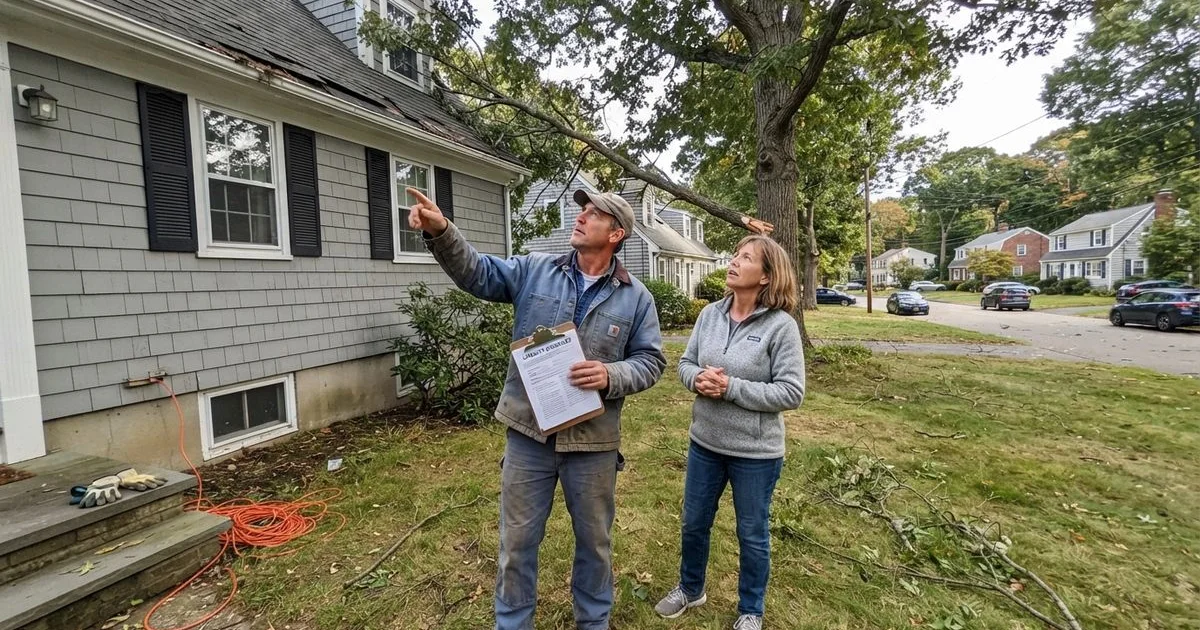
Storm damage to a roof usually involves three parties who each bear responsibility for a different piece of the problem: your insurer, the contractor who did prior work, and you as the homeowner. Sorting out who owes what starts with figuring out what actually caused the damage.
When it’s an insurance matter
If a storm’s wind, hail, or a falling tree limb causes damage that a reasonably well-maintained roof couldn’t have prevented, that’s squarely an insurance question, not a liability dispute with anyone. Your homeowners policy is built to cover exactly this kind of sudden, weather-driven event. The claim process centers on documentation: photos, a contractor’s written damage assessment, and the adjuster’s own report.
When it’s a contractor’s responsibility
If a leak during a storm traces back to something the contractor did, or didn’t do, during a prior roofing job, that’s a workmanship issue, separate from the storm itself. Flashing installed incorrectly, shingles not properly sealed, or a warranty registration that was never filed can all mean the contractor bears responsibility for the fix, regardless of what the weather did. This is exactly why a written workmanship warranty, separate from the manufacturer’s material warranty, matters when you hire someone for a roof repair or replacement in the first place.
The line between these two isn’t always obvious to a homeowner. An independent roof inspection, from a company not doing the repair itself, can help establish whether storm severity or prior workmanship is the more likely cause.
This is also where warranty registration paperwork earns its keep. Some manufacturer warranties are void if the original contractor never registered the installation, which can leave a homeowner without recourse even when the underlying cause was clearly a workmanship defect. Keeping a copy of the registration confirmation from your original roofing job is worth doing at the time, not years later when you need it.
When it falls on the homeowner
Liability can shift toward the homeowner in narrower situations: a known, unaddressed maintenance issue that made damage worse than it should have been, or a hazard like a dead tree limb overhanging the roof that went ignored despite obvious risk. Routine deferred maintenance generally doesn’t create liability on its own, but a documented hazard you knew about and didn’t act on is a different story, both for insurance claims and, in rarer cases, for damage to a neighbor’s property.
| Scenario | Who typically bears responsibility |
|---|---|
| Wind or hail damage to a well-maintained roof | Insurance |
| Leak traced to improperly installed flashing from a past job | Contractor, under workmanship warranty |
| Damage worsened by a known, unaddressed hazard | Homeowner, in part |
| Worker injury on-site from an uninsured contractor | Potentially the homeowner, absent contractor coverage |
| Storm debris causing damage to a neighbor’s property | Generally no one, absent prior negligence |
Protecting yourself before a storm happens
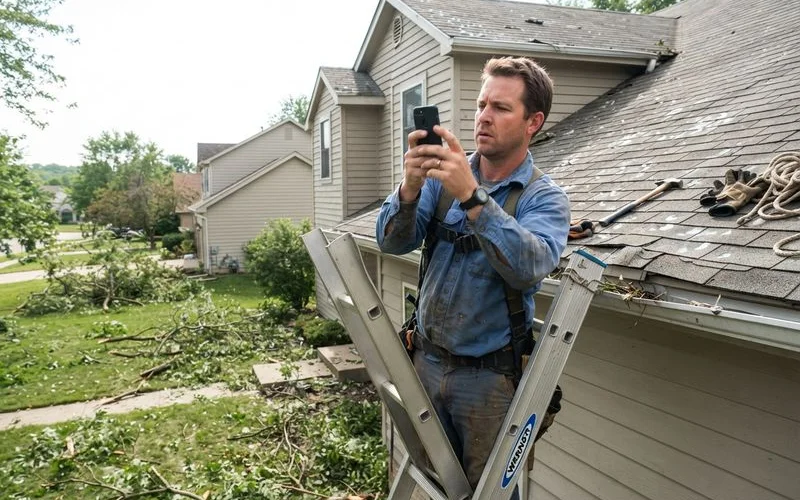
Confirming a contractor’s insurance and workmanship warranty before hiring them, addressing known hazards like dead limbs or failing flashing promptly, and keeping records of past roof work all reduce ambiguity if damage occurs later. A documented maintenance history is one of the strongest tools you have if a liability question ever comes up.
A simple habit worth adopting: photograph your roof’s general condition once a year, even with nothing wrong. That baseline record, dated and stored somewhere you can find it, becomes valuable evidence the moment there’s ever a dispute about what changed and when.
If you’re stuck between conflicting opinions
When a contractor and an insurance adjuster disagree about cause, get both assessments in writing and, if needed, bring in a third, independent inspector. Most insurers have a formal appraisal or dispute process for exactly this kind of disagreement. If you’re dealing with fresh damage right now, our storm damage roof repair page can connect you with a contractor, and our guide on roofing permits and contractor licensing in Connecticut covers the paperwork side of hiring one. Our methodology explains how we weigh contractor licensing and insurance status when scoring providers, and the full directory lists roofing contractors serving Greater Hartford.
FAQ
- Is a contractor liable if a roof they installed leaks during a later storm?
- It depends on the cause. If the leak traces back to faulty installation, like improperly sealed flashing, most reputable contractors carry a workmanship warranty that covers the fix. If the leak stems from storm severity beyond what any roof could reasonably withstand, that's typically an insurance matter, not a contractor liability issue.
- Am I liable if a storm damages a neighbor's property from debris off my roof?
- Generally, homeowners aren't held liable for storm-related debris under normal circumstances, since wind and weather are outside anyone's control. Liability becomes more likely if the damage traces back to neglected maintenance, like a roof or tree limb you knew was hazardous and didn't address.
- Does hiring an uninsured contractor put me at legal risk?
- Yes. If an uninsured worker is injured on your property, you could be held responsible for medical costs since there's no workers' compensation policy to cover the claim. Always confirm current insurance before work begins.
- What if my contractor and insurance adjuster disagree about what caused the damage?
- This happens often enough that it's worth documenting everything independently. Get the contractor's written assessment and the adjuster's report, and if they conflict, most insurers have a formal appraisal process to resolve disputed causation.