
Metal roofing cost in Connecticut: is the higher price worth it?
By Hannah Haddad · Updated 2026-06-19
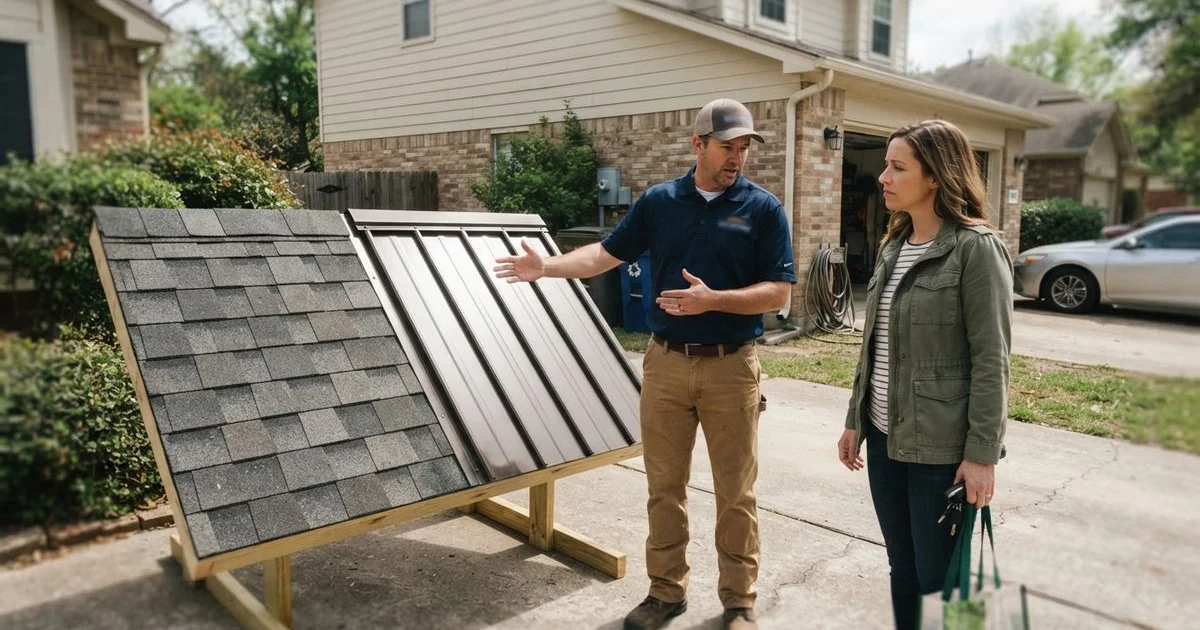
Metal roofing shows up on more homes across Greater Hartford every year, from standing seam on capes to exposed-fastener panels on additions and outbuildings. Homeowners comparing metal roofing contractors usually stall on the upfront cost before they get to the actual math, which is really a question of cost per year of roof life, not just cost per square foot.
What metal roofing actually costs
Most homeowners in this area pay somewhere between $9 and $16 per square foot installed, depending on panel style and metal type. Standing seam, with its raised, hidden-fastener seams, runs higher than exposed-fastener corrugated panels. A typical single-family re-roof often lands between $15,000 and $30,000, and copper or a complex roofline with multiple valleys pushes that higher still. For comparison, a standard asphalt shingle replacement on the same house typically runs $9,000 to $18,000, so metal usually costs somewhere between 60 percent and double the shingle price for the same roof.
Why the lifespan math changes the comparison
A properly installed steel or aluminum roof typically lasts 40 to 70 years. Asphalt shingles last 20 to 30 years in this climate, sometimes less with poor attic ventilation or repeated ice damming. If you divide total cost by expected years of service, metal often comes out roughly comparable to shingles, or cheaper, over a multi-decade horizon, even though the upfront number is higher. The math tips further in metal’s favor if you plan to stay in the home for 20 years or more and don’t want to face a second reroof.
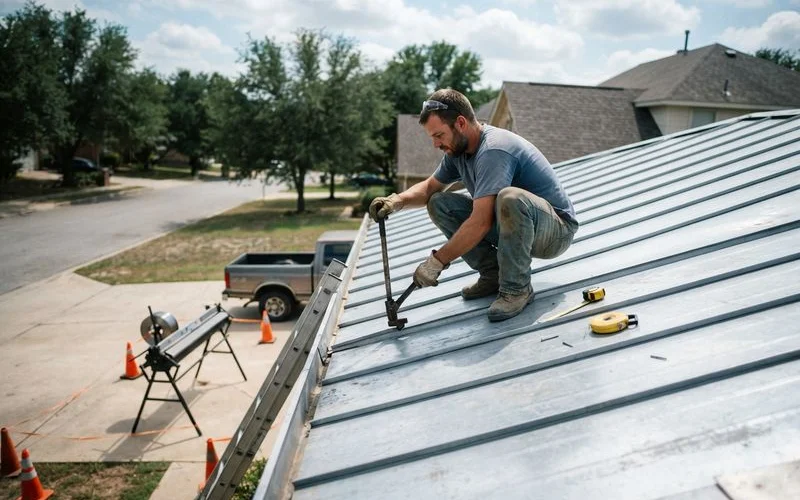
That said, installation quality matters more than the metal itself. A poorly flashed or improperly fastened metal roof can leak within a few winters, regardless of the material’s theoretical lifespan.
Standing seam versus exposed-fastener panels
| Standing seam | Exposed-fastener panels | |
|---|---|---|
| Typical cost | Higher end of the range | Lower end of the range |
| Fasteners | Hidden under raised seams | Visible screws through the panel face |
| Maintenance | Minimal; fewer leak points | Fasteners can loosen or wear gaskets over time, needing periodic checks |
| Best fit | Long-term ownership, higher-end homes | Garages, additions, budget-conscious projects |
Neither option is wrong; the choice comes down to budget and how long you plan to own the property.
Other factors that affect whether metal pays off
Snow and ice performance is a real consideration in this climate. Metal sheds snow more readily than shingles, which reduces load on the structure but also means snow can slide off suddenly near entrances or walkways; snow guards are worth discussing with your contractor if that’s a concern. Metal also reflects more heat than dark asphalt shingles, which can modestly reduce summer cooling costs, though this varies by attic insulation and color.
On the insurance side, some carriers offer a premium discount for impact-resistant roofing, which can include certain metal products, but eligibility and discount size vary by insurer. It’s worth a phone call to your agent before assuming it factors into the payback math.
Resale value is a smaller factor than people expect. Buyers generally view a newer metal roof favorably, but appraisers rarely credit the full cost premium over asphalt shingles, since comparable sales in the area are still mostly shingle roofs. Treat any resale bump as a modest bonus, not a reason on its own to choose metal.
Making the call
Metal roofing tends to be worth the higher price if you’re staying in the home long-term, want to avoid a second full reroof, or live somewhere with heavy tree debris that would otherwise mean frequent shingle repairs. It’s a harder case to make if you’re planning to sell within five to ten years, since the resale bump rarely covers the full cost difference. Either way, get written quotes for both options from the same contractor so you’re comparing installed price on your actual roof, not a generic estimate. Our methodology explains how we score contractors on manufacturer certification and workmanship, both of which matter more for metal roofing than for a standard shingle job. Browse the full directory to compare providers.
FAQ
- How much more does a metal roof cost than asphalt shingles?
- Metal typically runs $9 to $16 per square foot installed, versus roughly $9,000 to $18,000 total for an average shingle roof. A metal re-roof on the same house often lands between $15,000 and $30,000, so expect to pay noticeably more upfront.
- Does metal roofing actually last longer than shingles?
- Yes, generally. A properly installed steel or aluminum roof typically lasts 40 to 70 years, compared with 20 to 30 years for asphalt shingles. Installation quality, especially flashing and fasteners, affects lifespan more than the metal itself.
- Is standing seam worth the extra cost over exposed-fastener panels?
- For most homes, yes, if you're planning to stay long-term. Standing seam hides fasteners under a raised seam, which reduces leak points and holds up better over decades. Exposed-fastener panels cost less but need occasional fastener maintenance.
- Does metal roofing lower homeowners insurance premiums?
- Some insurers offer a discount for impact-resistant or Class 4 roofing materials, which can include certain metal systems, but the discount and eligibility vary by insurer. Ask your provider directly rather than assuming it applies.