
Emergency roof repair: what to do in the first 24 hours after storm damage
By Hannah Haddad · Updated 2026-06-29
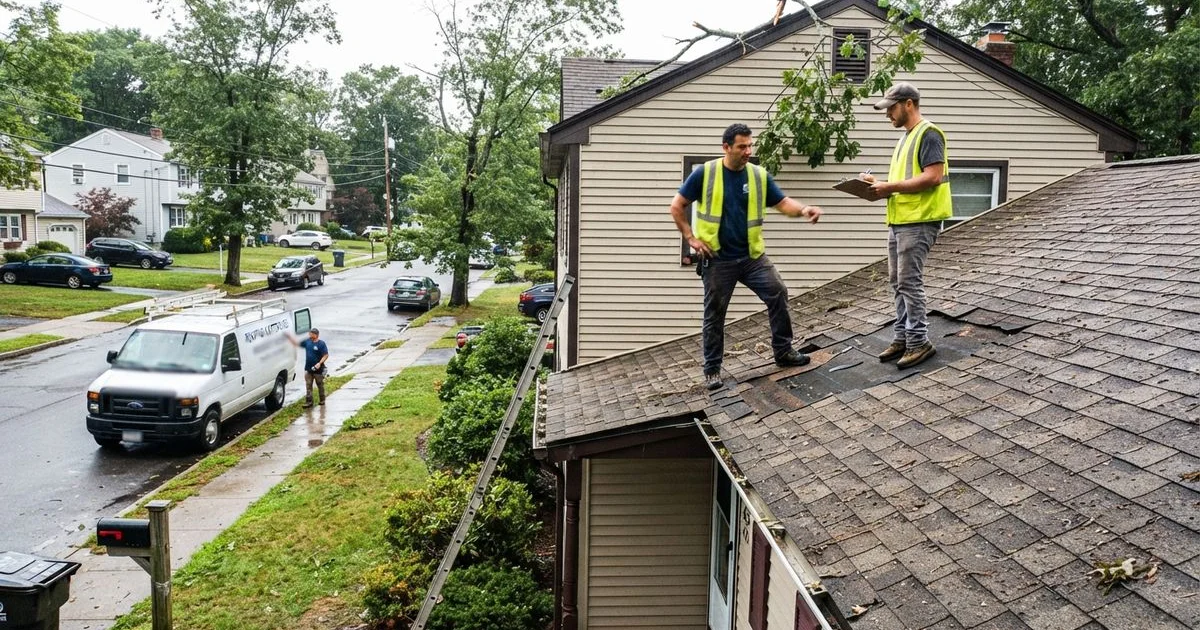
The first hour after you notice active roof damage matters more for protecting your home and your insurance claim than most people expect. A calm, ordered response beats a panicked one, and it’s worth knowing the steps before you’re standing in a hallway watching water come through the ceiling.
Step one: get everyone safe
If the damage is severe (a large hole, visible structural sagging, or a tree limb through the roof) stay out of the affected room and keep everyone away from areas where the ceiling could give way. Water and electricity are a dangerous combination; if water is near outlets or fixtures, shut off power to that area at the breaker if you can do so safely.
Step two: stop the water from spreading indoors
Move furniture and belongings out of the path of dripping water, and set buckets or containers under active leaks. If the ceiling is visibly bulging with trapped water, a small controlled puncture with a screwdriver in the center of the bulge (not a random spot) can relieve pressure in a contained way and prevent a larger, uncontrolled ceiling collapse. This is a judgment call; if you’re not comfortable doing it, skip it and focus on containment instead.
Step three: document before you touch anything
Photograph the damage from multiple angles, inside and outside, before any temporary repair happens. This matters for your insurance claim as much as for the contractor’s own records. Note the approximate time you first noticed the damage and what caused it, if known (wind, a fallen branch, hail).
Step four: call for emergency service
Contact an emergency roofing provider and ask directly how soon they can arrive, not just whether they offer 24/7 service. Our emergency roof leak repair request page can get that call moving quickly. A legitimate emergency crew should give you a real window, typically a few hours for active leaks or storm damage, rather than a vague “sometime today.”
| What to expect from the crew | What it is not |
|---|---|
| Safety assessment before anyone gets on the roof | A full roof replacement that night |
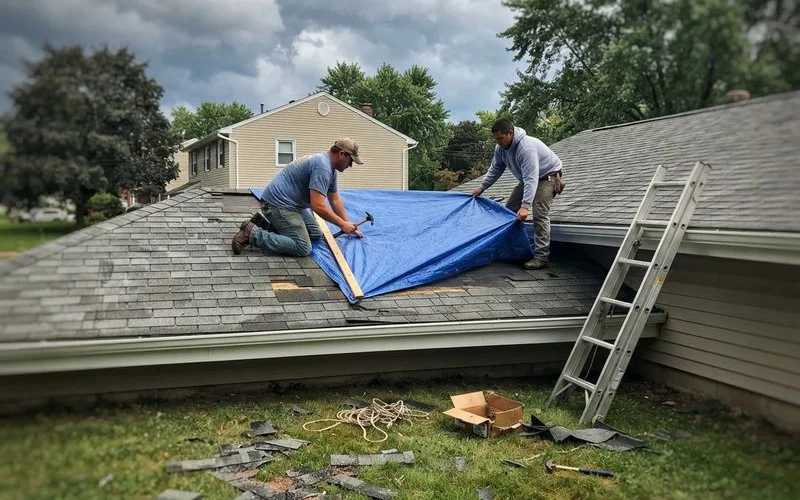
| Temporary tarp or covering to stop water intrusion | A permanent, finished repair |
| Photos of the damage for insurance documentation | A sales pitch pressuring you into a same-night contract |
| A rough plan and timeline for permanent repair | A vague “we’ll be in touch” with no written follow-up |
What a good emergency visit actually costs
Tarping alone usually runs a few hundred dollars, depending on roof size and how dangerous the access is, since crews are often working after hours or in bad weather. The permanent repair that follows is priced and scheduled separately, and can range from a few hundred dollars for a minor flashing or shingle fix to several thousand for structural or large-section damage. Get a written follow-up estimate for the permanent work rather than letting the emergency visit be the last contact you have with the company.
Judging whether the emergency work held
A solid temporary fix should hold through the next storm without a new leak appearing. Ask for before-and-after photos of the tarping work, and check that it’s properly secured to the roof rather than just draped loosely over the damaged area. If the same spot leaks again within days, call the same company back rather than starting over with someone new; a reputable crew will stand behind the temporary fix.
Watch out for pressure to sign a full repair or replacement contract on the spot during the emergency visit. A legitimate crew focuses on stopping the immediate damage and follows up with a separate, written estimate once things have calmed down, giving you time to compare it against other quotes rather than deciding under stress.
After the immediate crisis
Once the property is stabilized, follow up with your insurance company using the photos and documentation you gathered, and get a written estimate for permanent repair. Keep the whole file together, photos, receipts, and both estimates, in one place so you’re not reconstructing the timeline weeks later if the claim takes longer than expected. Winter storms and ice dams cause a lot of these calls; our Connecticut winter roof prep checklist covers how to cut the odds you’ll need this guide again. Our methodology explains how we score emergency responsiveness alongside workmanship when ranking contractors, and the full directory lists every provider serving Greater Hartford.
FAQ
- How fast should a 24/7 roofer actually respond after I call?
- For an active leak or storm damage, a legitimate emergency roofer should be on site within a few hours, not the next day. If a company can't give you a rough arrival window on the phone, treat that as a sign their after-hours service is more marketing than real dispatch capability.
- Should I try to tarp the roof myself?
- Only if it's safe to do from the ground or a stable ladder, and only for minor, accessible damage. Getting on a wet or damaged roof yourself risks a fall that's far worse than the leak. Interior measures like buckets and moving belongings are the safer first move.
- How much does emergency roof repair typically cost?
- Emergency tarping usually runs a few hundred dollars depending on roof size and access difficulty. The permanent repair that follows is priced separately, ranging from a few hundred dollars for minor fixes to several thousand for structural or large-section damage.
- Will an emergency roofer fix the damage completely that night?
- No. The first visit is about stopping water intrusion with a tarp or temporary cover, assessing safety, and documenting damage. The permanent repair gets scheduled separately once weather and materials allow.