
Commercial roof maintenance: how often and what a plan should include
By Hannah Haddad · Updated 2026-07-13
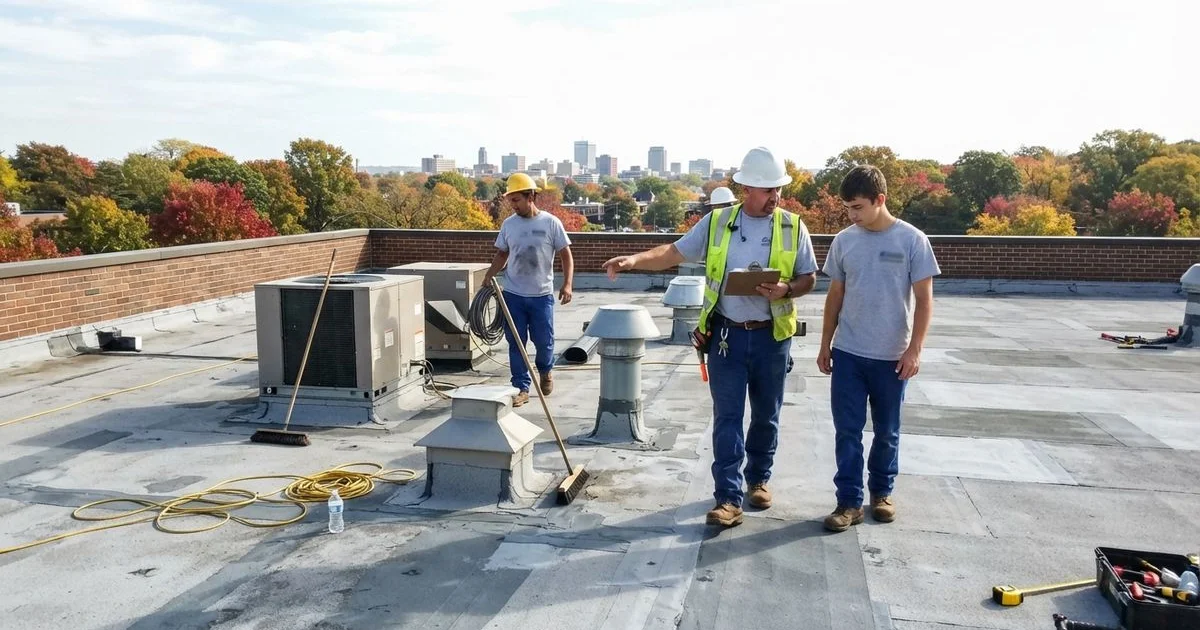
A flat or low-slope commercial roof rarely fails all at once. It degrades gradually through small, unnoticed problems: a separating seam, a clogged drain, insulation that’s absorbed moisture, until one of them finally lets water through and becomes a tenant complaint or an emergency call. A maintenance schedule exists to catch those problems while they’re still cheap to fix.
Why twice a year is the baseline
Most single-ply membrane systems (TPO, EPDM) and modified bitumen roofs last 15 to 25 years, but that lifespan assumes regular attention. A spring inspection catches winter damage: ice buildup around drains, membrane cracking from freeze-thaw cycles, and debris that accumulated over the season. A fall inspection checks the roof is ready for winter: drains clear, seams intact, and any summer storm damage addressed before snow load adds stress. Buildings with rooftop HVAC equipment, heavy foot traffic for other maintenance work, or a history of ponding water often do better with quarterly checks rather than stretching to twice a year.
What a proper maintenance visit actually covers
A walk-through that just confirms “no obvious leaks” misses most of what actually causes commercial roof failures. A thorough visit for a commercial roofing property should include:
- Seam inspection along membrane edges and around every penetration
- Drain and scupper checks to confirm water isn’t pooling anywhere on the roof
- Flashing condition at parapets, curbs, and equipment mounts
- Membrane surface condition, checking for punctures, blistering, or UV degradation
- Rooftop equipment support checks, since HVAC units and their curbs are common leak points
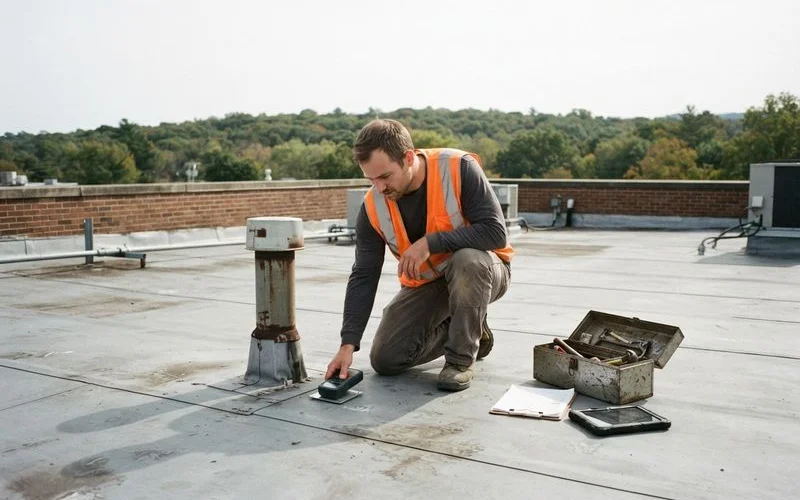
- Photo documentation of any developing issues, even minor ones, to track change over time
| Maintenance interval | Best fit | What it catches |
|---|---|---|
| Twice yearly (spring and fall) | Most low-slope commercial buildings | Seasonal wear, seam issues, drain clogs |
| Quarterly | Buildings with rooftop HVAC, known ponding, or heavy roof traffic | Faster-developing issues before they compound |
| After every major storm | All commercial roofs | Wind, hail, or debris damage before it’s found the hard way |
Why documentation matters as much as the inspection
A maintenance plan is only as useful as the record it leaves behind. A single inspection tells you the roof’s condition on one day; a documented history across several visits shows whether a seam issue is stable or worsening, and whether a repair from last year actually held. This record also matters if you ever need to file a warranty claim, since many manufacturer warranties require proof of regular maintenance to stay valid, or if you’re negotiating an insurance claim after storm damage.
What building owners should expect during a visit
A professional crew should walk the roof (not just glance at it from a rooftop access door), mark any rooftop equipment and drains they’re checking, and give you a written report afterward, not just a verbal “looks fine.” For an occupied building, ask how they plan to work around tenants and whether they’ll flag anything urgent immediately rather than waiting for a written report days later.
It’s also worth asking who signs off on the report and whether photos are timestamped and organized by location on the roof. A vague summary email is far less useful two years from now than a report you can compare side by side with the next inspection to see exactly what changed, especially if ownership or property management changes hands during the roof’s remaining life.
Budgeting for maintenance versus reactive repair
Preventive maintenance has a real cost, but it’s consistently smaller than the alternative: interior damage, tenant disruption, and emergency repair costs that follow when a small problem goes unnoticed until it becomes a leak. A membrane reroof for a low-slope commercial building typically runs $6 to $15 per square foot depending on membrane type and condition of the deck; a maintenance plan is a fraction of that cost spread over years and is what keeps you from facing that number early. If a problem does turn into an active leak, the same first-hour steps apply as on any building; see our guide on emergency roof repair in the first 24 hours. Our methodology explains how we weigh manufacturer certification and review consistency for commercial contractors, and the full directory lists providers serving Greater Hartford.
FAQ
- How often should a commercial roof be inspected?
- At least twice a year, typically spring and fall, plus after any major storm. Buildings with rooftop HVAC units, heavy foot traffic for maintenance, or known ponding issues often benefit from quarterly checks instead.
- How long do commercial roof membranes typically last?
- Most single-ply membrane systems like TPO and EPDM last 15 to 25 years with regular maintenance. Built-up roofing and older systems can last longer but require more frequent attention to the gravel cap and seams.
- What does a maintenance plan cover that a one-time inspection doesn't?
- A plan builds a documented history over time, catching gradual issues like seam degradation or ponding that develops slowly and is easy to miss in a single visit. It also creates a paper trail that matters for warranty claims and insurance purposes.
- Is preventive maintenance actually cheaper than reactive repairs?
- Generally, yes. Catching a small seam separation or a clogged drain during a scheduled visit costs far less than the interior damage, tenant disruption, and emergency repair that follow when the same issue goes unnoticed until it causes a leak.