
Roof work safety: what separates a careful crew from a risky one
By Hannah Haddad · Updated 2026-07-06
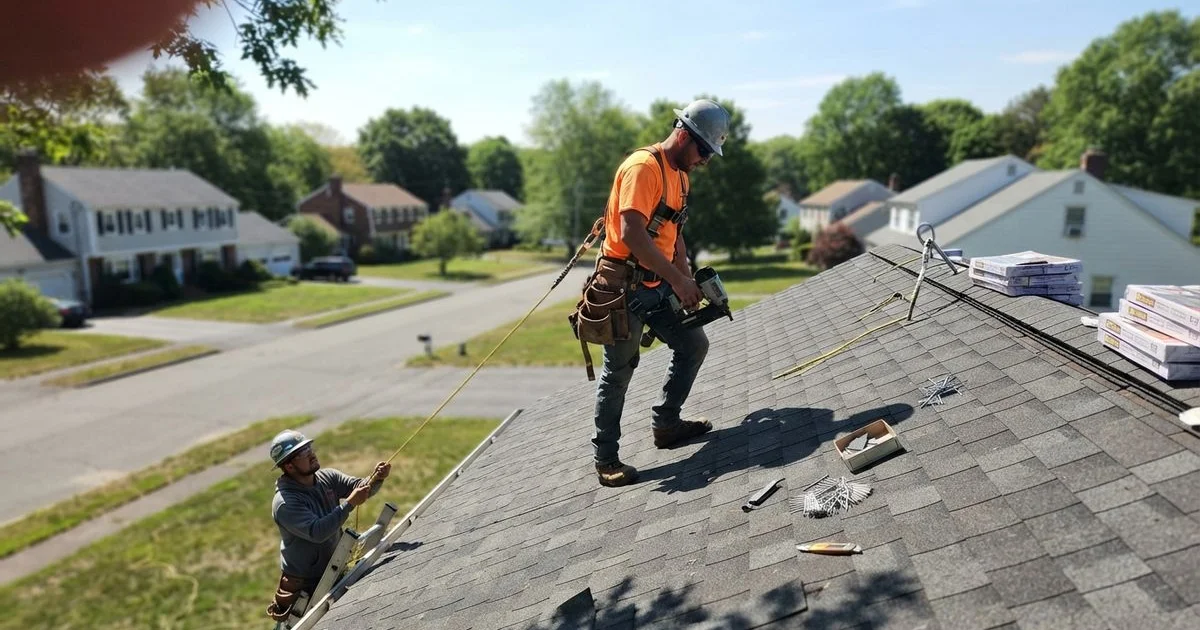
Roofing is physically demanding work done at height, and the practices a crew follows on your roof tell you almost as much about their overall quality as the finished shingles do. A careful crew and a rushed one often produce a visually similar result in the first year, but the difference shows up in how the job was actually done.
Why fall risk is the central safety issue
Working at height on a sloped, sometimes wet or icy surface, while carrying bundles of shingles or tools, creates conditions where a single misstep has serious consequences. This is true whether the job is a straightforward roof repair or a full tear-off. Professional crews manage this risk with harnesses and anchor points on steeper pitches, toe boards or guardrails near edges, and simply pacing the job so no one is rushing across a slick surface to hit a deadline.
What a safety-conscious crew actually does
- Sets up ladder stabilizers away from gutters so weight doesn’t damage them and the ladder stays secure
- Uses harnesses and roof anchors on steep or high pitches, not just on paper for insurance purposes
- Times tear-off work around weather, avoiding wet or icy conditions on steep sections
- Keeps the ground area clear and cordoned off from foot traffic while material is being dropped or removed
- Does a magnetic nail sweep of the yard and driveway before leaving, protecting people and pets after the crew is gone
Why this matters for you as the homeowner
A contractor without current workers’ compensation insurance can leave you financially exposed if a worker is injured on your property. If there’s no policy covering the crew, an injured worker or their family could pursue you directly for medical costs. This is one of the clearest reasons proof of insurance isn’t optional paperwork, it’s protection for both sides of the job.
| Safety practice | Why it matters to you |
|---|---|
| Current workers’ compensation insurance | Protects you from liability if a worker is hurt on your property |
| Harnesses and anchors on steep pitches | Reduces the odds of a serious accident mid-job on your roof |
| Weather-aware scheduling | Avoids rushed work on wet or icy surfaces that leads to shortcuts |
| Magnetic nail sweep after the job | Prevents injuries to people, pets, or vehicle tires after the crew leaves |
| Ladder stabilizers away from gutters | Protects your gutters from being crushed or bent during the job |
Questions worth asking before the job starts
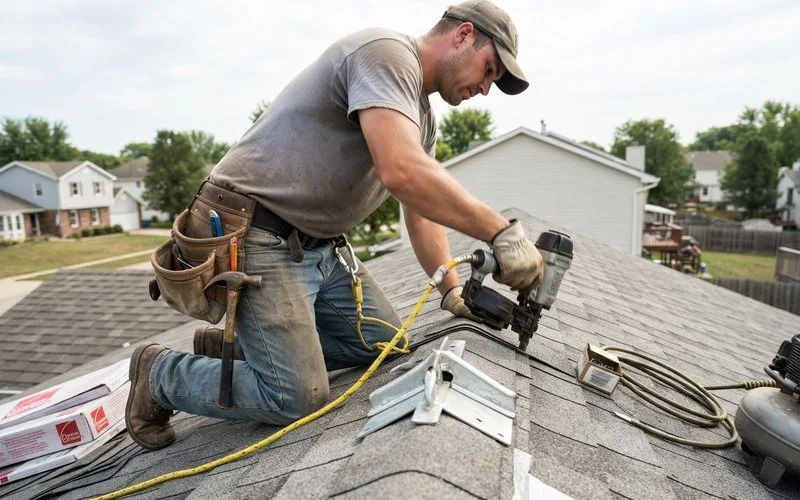
Ask directly whether the crew uses fall protection on your specific roof pitch, how they plan around weather, and whether they carry current workers’ compensation coverage, not just general liability. A contractor who answers plainly and in specifics, rather than deflecting, is generally the same contractor who handles flashing details and cleanup carefully too.
Watching a job in progress
If you’re home during the work, a few visible things are reasonable to notice: whether the crew appears rushed or careless near roof edges, whether ladders look properly secured, and whether the ground area stays reasonably organized rather than cluttered with debris and stray materials. None of this requires expertise to spot, just attention.
Winter jobs carry extra risk
Cold-weather roofing, whether it’s an emergency repair or a scheduled job in shoulder-season months, adds ice and frost to an already sloped surface. A crew working in these conditions should be even more deliberate about anchor points and timing, sometimes starting later in the day once frost has burned off a low-slope section. If a contractor is pushing to start work on a visibly frosted or icy roof without extra precautions, it’s reasonable to ask them to wait for safer conditions rather than assume the schedule matters more than the crew’s safety on your property.
Safety practices and workmanship quality tend to travel together, so a few minutes spent asking about safety habits up front tells you far more than a glossy website ever will. A crew’s care on the roof isn’t the only health angle worth thinking about; a roof that’s been leaking unnoticed for a while creates its own problems inside the house, covered in our guide on health risks of a leaking roof. Our methodology weighs licensing and insurance status as part of how we score contractors, and the full directory lists providers serving Greater Hartford.
FAQ
- Why do falls happen so often in roofing work?
- Steep or wet surfaces, working near unprotected edges, and the physical demands of carrying materials up a ladder all combine to make falls the leading cause of injury in roofing work. Most incidents trace back to skipped fall protection or rushed timelines, not the work itself being inherently unsafe.
- Should I ever get on my own roof to check for damage?
- Only if it's a low-slope, easily accessible roof and you're comfortable on a ladder. For anything steep, wet, icy, or more than one story, it's not worth the risk. Binoculars from the ground or a contractor's inspection are safer ways to check condition.
- Does a crew wearing harnesses actually matter for the quality of the work?
- It's a reasonable proxy. A crew that takes fall protection seriously tends to also follow other procedures carefully, like proper flashing installation and material handling, rather than rushing to finish faster.
- What should I do if I see a crew working without any visible safety equipment?
- It's fair to ask about their safety practices directly. A contractor who brushes off the question or treats safety gear as optional is a sign worth taking seriously before or during a job on your property.