
Health risks of a leaking roof: mold, moisture, and indoor air quality
By Hannah Haddad · Updated 2026-07-10
This is general information, not medical advice. If you have ongoing respiratory symptoms or health concerns related to mold exposure, consult a physician.
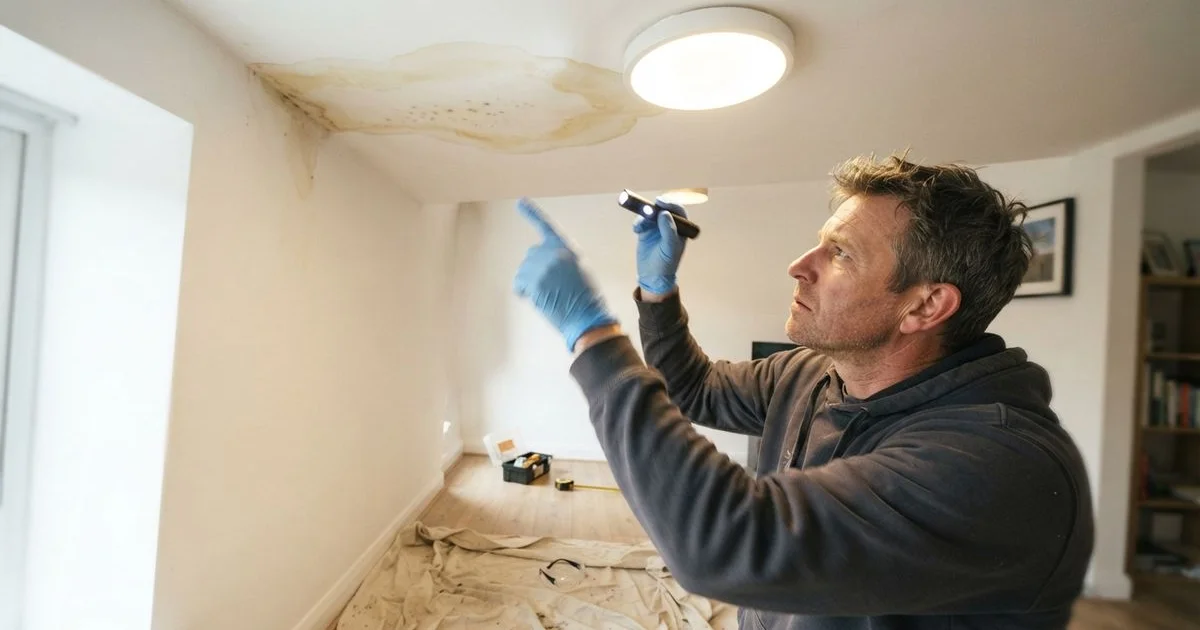
A roof leak is a structural problem first, but left unaddressed it becomes a health problem too. The connection isn’t always obvious because the moisture causing it is often hidden behind drywall or insulation, doing damage well before anyone notices a stain on the ceiling.
How a leak turns into a mold problem
Mold needs three things to grow: moisture, an organic material to feed on, and time. A roof leak supplies the first two immediately, wood framing, drywall paper, and insulation all qualify, and mold can begin establishing itself within 24 to 48 hours under the right conditions. A leak that’s caught and fixed within a day or two is far less likely to result in meaningful mold growth than one that goes unnoticed inside a wall cavity or attic space for weeks.
This is part of why ice dams and slow winter leaks are particularly concerning: the moisture often accumulates gradually inside insulation and framing, hidden from view, rather than showing up as an obvious drip.
Health symptoms worth paying attention to
Mold exposure affects people differently, and not everyone in a household reacts the same way. Symptoms that show a pattern of improving when you’re away from home and worsening indoors are a meaningful signal, including:
- Persistent coughing or throat irritation
- Nasal congestion or sinus pressure that doesn’t resolve like a typical cold
- Headaches with no other clear cause
- Worsening asthma or allergy symptoms, especially in a home with a known past leak
None of these symptoms alone confirms mold exposure, and plenty of other things cause similar issues. But a pattern of them, combined with a known or suspected leak, is worth treating as a signal to investigate rather than dismiss.
Where hidden moisture tends to collect
| Location | Why it’s a common trouble spot |
|---|---|
| Attic insulation near roof penetrations | Leaks around vents, chimneys, and skylights often travel along framing before showing a visible stain |
| Wall cavities below roof valleys | Valleys channel more water than flat roof sections, so a small flashing gap has an outsized effect |
| Behind bathroom or kitchen exhaust vents | Poor venting combined with a nearby roof leak compounds moisture in one area |
| Under improperly overlapping ice-and-water shield | Gaps here let water travel further into the structure before it’s visible |
Fixing the source versus treating the symptom
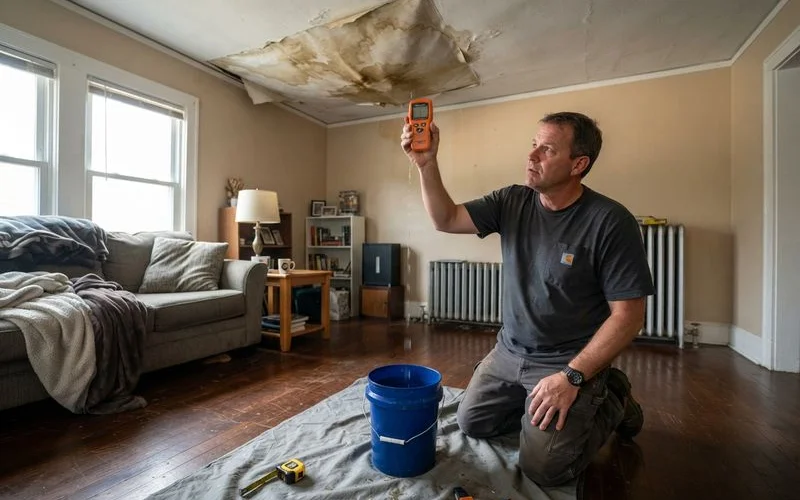
Addressing visible mold with bleach or a surface cleaner without fixing the underlying leak is a temporary and often ineffective measure. The water source has to stop first; otherwise mold returns, frequently in the same spot, within weeks. A roofer can identify and repair the leak itself. If mold growth turns out to be extensive once walls or insulation are opened up, a separate mold remediation specialist is worth involving for thorough cleanup and testing, particularly if anyone in the household has ongoing symptoms.
Insulation that’s absorbed water rarely recovers its original performance even after it dries out, and wet insulation left in place can keep feeding mold growth long after the leak itself is fixed. Any insulation that was saturated is usually worth replacing as part of the repair, not just drying in place.
When to treat it as urgent
A leak paired with a musty odor, visible discoloration on ceilings or walls, or new or worsening respiratory symptoms in the household is worth acting on quickly rather than waiting to see if it gets worse. The cost of an early repair is almost always smaller than the cost of remediation after mold has spread through framing and insulation.
If you suspect a leak but can’t locate the source, a professional roof inspection can trace it back to the actual point of entry, which is often some distance from where the stain appears indoors. If the leak is active right now, our emergency roof leak repair page can get someone out quickly; a careful crew matters here too, which our guide on roof work safety covers. Our methodology explains how we score contractors on responsiveness and thoroughness, and the full directory lists providers serving Greater Hartford.
FAQ
- How quickly can mold grow after a roof leak?
- Mold can begin growing within 24 to 48 hours in damp material under the right temperature and humidity conditions. A leak left unaddressed for even a few days can establish mold growth inside wall cavities or attic spaces before it's visible.
- What symptoms suggest mold exposure from a hidden roof leak?
- Persistent coughing, nasal congestion, headaches, or worsening allergy and asthma symptoms that improve when you're away from home can point to mold exposure. These symptoms alone aren't a diagnosis, but they're worth investigating alongside any visible water staining.
- Can a small, slow leak be as harmful as a big one?
- In some ways, yes. A small, chronic leak that goes unnoticed for months can create sustained moisture and hidden mold growth inside walls or attic spaces, while a large, obvious leak usually gets addressed quickly simply because it's impossible to ignore.
- Do I need a specialist to test for mold, or can a roofer handle it?
- A roofer can identify and fix the water source, which is the essential first step. If mold growth is extensive or you have ongoing health symptoms, a separate mold remediation specialist or indoor air quality professional is worth bringing in for testing and cleanup.